Best Yoga Gear and Fitness Equipment for Small Apartments
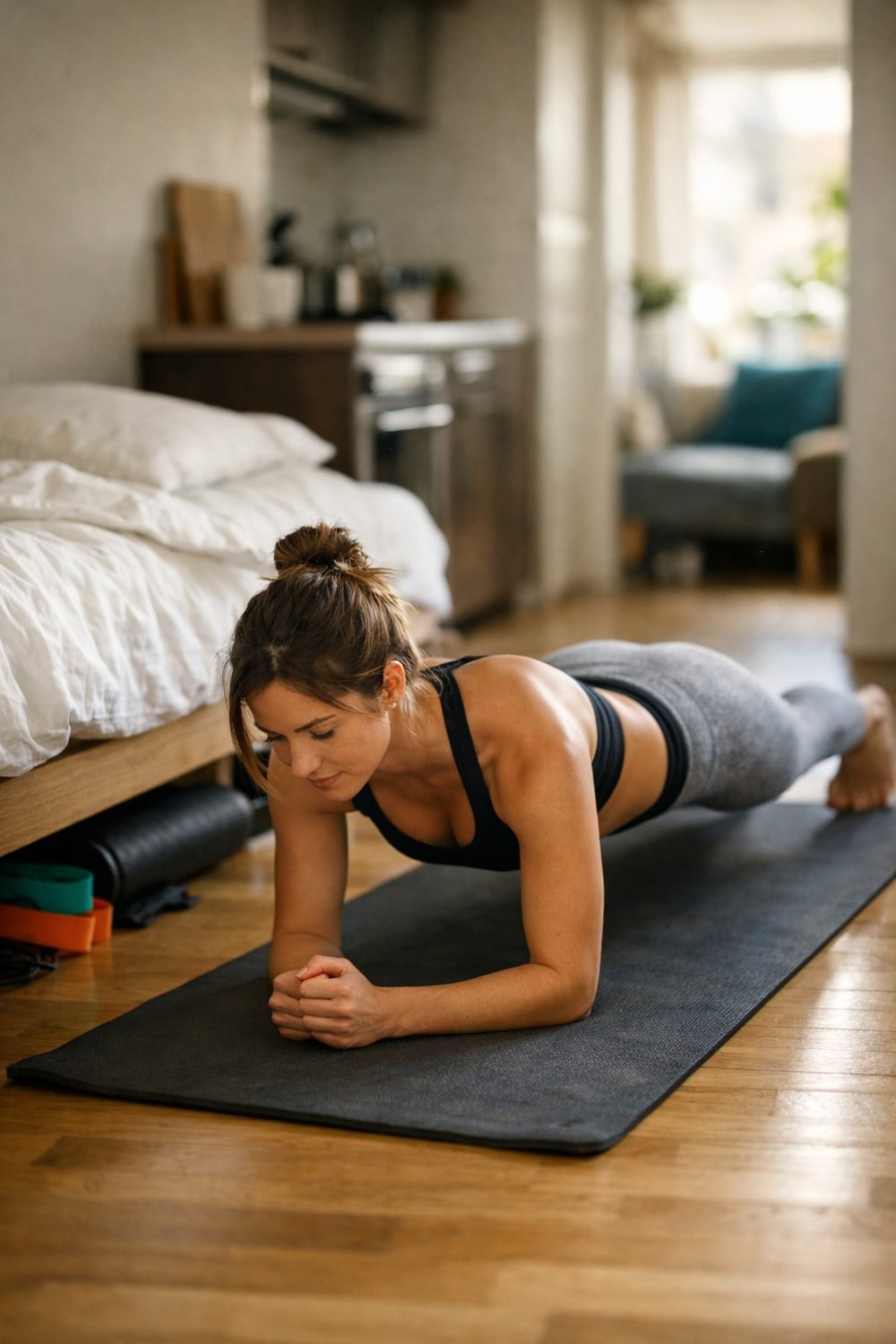
Choosing the best yoga gear for a small apartment is mostly about space, not spending. Good gear fits your floor, stores away easily, and stays quiet for your neighbors. This guide covers how to measure your space, pick fitness gear that folds flat, and keep everything tidy.
In a very small living room, doing a lunge can mean your back foot ends up under the coffee table. A common mistake is buying too much gear, tripping over it, and ending up with a pile in the closet that sits untouched for a year.
The best fitness equipment for a small place is gear that works with your space. Small spaces call for items that fold, stack or do double duty. If something can't do at least one of those, it probably doesn't belong in a tiny place. Here's what I'd tell a friend who's setting up a home workout corner in an apartment that's short on floor and long on furniture.
Short on time? Our top picks: Bowflex SelectTech Dumbbells, Manduka PRO Yoga Mat, Gaiam Yoga Mat and TheraBand Resistance Bands. See all picks
Measure Before You Buy Anything
This sounds boring. It's also the step I skipped, and I regret it.
Grab a tape measure and find the spot where you'd actually work out. Not the dream spot. The real one, the patch of floor between the couch and the TV stand, or the strip next to your bed. Measure the length and width. Then lie down on the floor and stretch your arms over your head. Do you hit anything? Swing your arms out to the sides. Still clear?
Don't forget height, either. If you want to jump rope or press weights overhead, a low ceiling or a hanging light can ruin your plans fast. It is easy to smack a ceiling fan with a resistance band handle. The fan survived. Your pride might not recover.
Write your numbers down and keep them on your phone. When you're looking at a product page, compare the listed size to your space before you get excited about it. If the seller doesn't list the size clearly, that's a small red flag on its own.
Pick the Best Yoga Gear and Small Gym Gear That Folds Flat
Folding gear is the backbone of a small-space setup. A small yoga mat that rolls or folds can disappear behind a door in seconds. Some benches fold down too, and a few slide right under a bed.
Here's what tends to work well when space is tight:
- A folding or roll-up mat, like a Gaiam Yoga Mat. Pick one thick enough to be kind to your knees but thin enough to store easily.
- Resistance bands, such as TheraBand Resistance Bands. They weigh almost nothing and fit in a drawer. Honestly, they're my favorite small-apartment tool.
- A folding bench. Only if you'll use it often. Check the folded size, not just the open size.
- Adjustable small dumbbell set. One set that changes weight can replace a whole row of dumbbells, and a small weight set like that is easy to tuck away.
What I'd skip? Big, fixed machines that "fold" but still take up a whole corner when folded. Some of them are really just slightly smaller when stored. Read the folded measurements carefully, because that's the size you'll live with most of the time.
Find a Home for Everything
Gear you can't put away becomes clutter. And clutter becomes guilt. That is not meant to be dramatic. A pile of weights in the corner of my bedroom used to stare at me every night.
Before you bring something home, picture exactly where it will live. Under the bed? In a closet? On a hook behind the bathroom door? If you can't answer that, wait.
A few storage tricks that helped me:
- A shallow bin under the bed for bands, a jump rope and a foam roller.
- Over-the-door hooks for mats and bands.
- A basket near the couch that looks like regular home decor but holds a small dumbbell rack's worth of light weights.
The goal is to make setup and cleanup take less than a minute. If it takes longer, you'll start skipping workouts just to avoid the mess. Plenty of people have done exactly that.
By the way, if planning meals is another thing that keeps slipping, you can grab my free 3 Meal Prep Idea Cards for breakfast, lunch and dinner by joining the email list.
Be Kind to Your Neighbors
Shared walls and floors change everything. The person living below you didn't sign up for your morning burpees.
If you live upstairs, think hard about jumping. Jump rope, jumping jacks and box jumps can sound like thunder to the folks underneath. Dropping weights is even worse. A downstairs neighbor might knock, very politely, and ask if you are "moving furniture at 6 a.m." when you are not. You are just doing a workout video.
Quieter options are out there, and they're not boring:
- Bodyweight strength moves like squats, lunges and push-ups.
- Resistance band work.
- Yoga and stretching, where good yoga gear goes a long way.
- Slow, controlled moves with light weights.
A thicker mat can soften some sound, but it won't make jumping silent. If high-energy cardio is your thing, you might save it for a park or a quick run outside and keep indoor sessions low-impact.
Timing matters too. Early mornings and late nights are when people notice noise most. A midday or early-evening workout is usually less likely to bother anyone.
Start Small and Add Slowly
This is the part people don't want to hear. You probably need less than you think.
If you start over, consider buying just one thing: a set of resistance bands. Try using them for a month before adding anything else. Then I added a mat. A few months later, adjustable weights. Each item earned its spot by getting used.
Buying a whole small home gym at once feels motivating. It's not. It just fills your space with stuff you're not sure you'll touch. Start with the one item that matches the workouts you already like, then live with it for a few weeks.
It helps to track what you actually do. If you like having things on paper, the Busy Adults Fitness Planner and Checklist Bundle below this post is something I put together for exactly that: seeing which workouts you stick with before you spend more.
Think About Recovery Gear, Too
Working out in a small space often means you're doing more bodyweight and band work, and your muscles still get sore. Recovery tools tend to be small, which is good news.
A foam roller, such as the TriggerPoint GRID Foam Roller, is easy to stash. A massage ball fits in a drawer. Some people like massage guns, though I think they're a little overrated for beginners. They can be handy, but they're not a must on day one. If you're curious, compare features and noise levels first. The Massage Gun Buyer's Guide and Comparison Sheets below this post can help you sort through options without guessing.
If you have pain that doesn't go away, or an injury, it's smart to talk with a doctor or physical therapist before using any recovery tool.
Read the Return Policy Before You Click Buy
Gear that looks compact online can feel huge in a tiny apartment. That's why I always check the return policy first now.
Look at the seller's page for details like how many days you have to return something, whether it has to be unopened, and who pays for return shipping. Heavy items like weights can be expensive to send back, so this matters more than you'd expect.
Keep the box for a little while if you can. Boxes take up space too. But flattening one and sliding it behind the fridge for a couple of weeks has saved me more than once.
Our Top Picks for Small Spaces
These are well-known options that tend to suit tight apartments. Match each one to the workouts you already enjoy before you add it to your cart.
Bowflex SelectTech Dumbbells
A good fit if you want one set of adjustable weights instead of a whole rack. Check the footprint of the stand or tray, and whether the weight range matches what you lift.
Manduka PRO Yoga Mat
Suits people who want a cushioned, durable mat for yoga and floor work. Check how heavy it is and how easily it rolls up for your storage spot.
Gaiam Yoga Mat
A simple, widely available option for beginners who want a mat without a big commitment. Check the thickness against your knees and your storage space.
TheraBand Resistance Bands
A familiar name for band workouts and gentle strength or rehab-style moves. Check which resistance levels come in the set so you have room to progress.
Fitness Gear Adjustable Bench
A folding bench option for people who lift often and have a spot to stash it. Check the folded size and the weight limit on the product page.
TriggerPoint GRID Foam Roller
Suits anyone who wants an easy recovery tool that stores under a bed or in a closet. Check the firmness, since some people prefer a softer roller.
Crossrope Jump Rope
Suits people with enough ceiling height who want compact cardio. Check your neighbors and your floor first, since jumping can be loud.
Check current plans and prices on each brand's own site before you buy.
FAQ
How much space do I really need to work out at home?
Enough to lie down flat and stretch your arms out without hitting anything is a good starting point. For most bodyweight and band workouts, a mat-sized area plus a little room around it works fine. Measure your own space so you know for sure.
What's the best first item of fitness gear for a small apartment?
For many people, resistance bands or a good mat. Both are cheap to store and work for lots of different workouts. Pick the one that fits the kind of exercise you already enjoy.
How can I work out without bothering my neighbors?
Choose low-impact moves like strength work, yoga and band exercises instead of jumping. Avoid dropping weights, and try to work out at reasonable hours. A thicker mat can help a bit, but it won't fix loud movements.
Are foldable benches sturdy enough?
Some are and some aren't, so it really depends on the product. Check the seller's page for weight limits and folded size. If you're unsure, read the return policy before buying so you have an option if it doesn't feel right.
Quick Recap
Measure your space, pick fitness gear for small apartments that folds or stores easily, and know where every item will live. Keep things quiet if you share walls. Buy one piece at a time and only add what you really use. And always check the return policy on the seller's page.
If you want an easy next step, sign up for the free 3 Meal Prep Idea Cards so your food plan is as simple as your new workout corner. Then take a look at the planner bundle and the massage gun guide below this post, and see if either one fits what you need right now.
Printables and tools that can help
Busy Adults Fitness Planner and Checklist Bundle
A printable bundle with a 30-day goal page, weekly planner and setup checklists for starting a routine at...
See detailsMassage Gun Buyer's Guide and Comparison Sheets
A printable guide and comparison sheets to note what matters to you before you look at any seller...
See details