How to Keep a Simple Fitness Journal
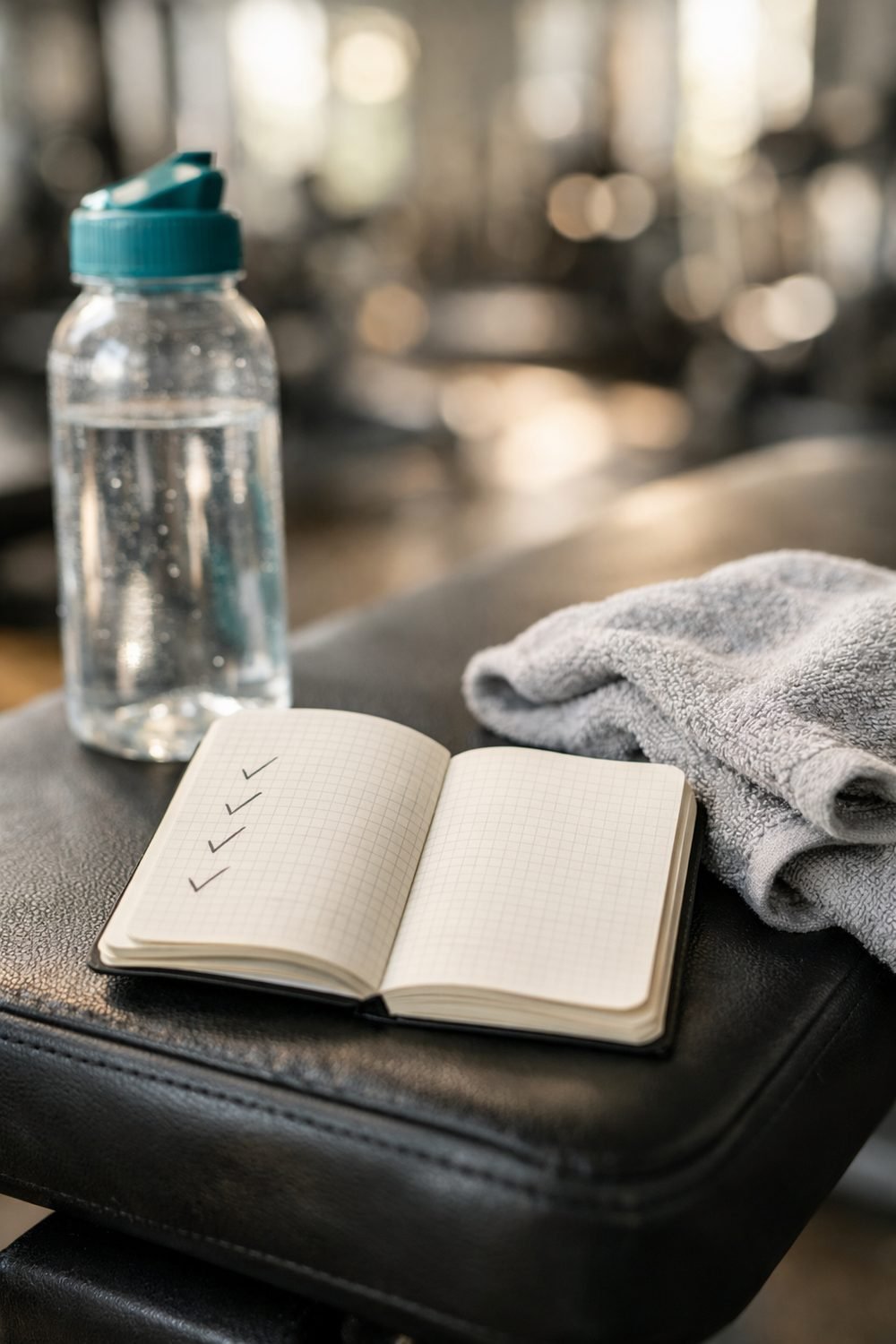
You might finish a workout feeling great, then forget it ever happened. A week later I couldn't tell you if I'd walked twice or four times, or why my knees felt off on Thursday. A simple fitness journal fixed that for me. Not a fancy one. Just a few lines after each session, written while I was still catching my breath.
That's really all this is. You're turning fuzzy memories into short, clear notes you can look back on. You don't need to be an athlete, and you don't need a perfect routine. If you move your body at all, a journal can help you see what's working and what isn't.
Here are my fitness journal ideas, step by step, plus the problems I ran into and how I got past them.
Short on time? Our top picks: Leuchtturm1917, Moleskine, Rocketbook and Strong. See all picks
What you need for a fitness journal
- Something to write in. A cheap notebook works fine, such as a Moleskine or any plain one. So does a notes app on your phone, like Google Keep, if you'll actually open it.
- A pen, like a Pilot G2, that lives with the notebook. This sounds silly, but hunting for a pen is how I skipped my first few entries.
- About two minutes after each session. That's it. Longer than five minutes and you'll start dreading it.
- A spot to keep it. Somewhere you'll see it right after you move. More on that in Step 6.
You don't need colored pens, stickers, or a special layout. Some people love that stuff, and if it makes you happy, go for it. But I'd skip it at the start. Fancy setups tend to make people feel like they're "doing it wrong" the moment they get lazy with an entry.
Step 1: Write the date and the activity
Start every entry the same way. Date first, then what you did in a few words. "Mon, March 4. Walk around the park." Or "Thursday. Yoga video, 20 min."
Keep this part short on purpose. It's the anchor of the whole entry. Even on days you're tired and can't be bothered to write anything else, you can almost always manage one line with the date and the activity. And one line is still a record.
It helps to write the day of the week too, not just the number. When I look back, it's much easier to spot things like "I always skip Fridays" if the days are right there on the page.
Tip: If you didn't work out, you can still write the date and "rest day" or "skipped." It feels a bit odd at first, but those blank days tell a story too, especially when you review later.
Step 2: Note how you felt
This is the part most people leave out, and honestly it's the part I find most useful. Before you write numbers, jot down how you felt. Energy, mood, and anything your body told you.
Something like:
- "Low energy at first, better after 10 min."
- "Grumpy, slept badly."
- "Left calf felt tight on the hills."
- "Really good. Could've kept going."
You don't need to write a diary entry. A few words is plenty. Some people use a simple 1 to 5 score for energy. A common issue with rating workouts on a 1 to 5 scale is that many people default to 3, so short written notes can work better. Try both and see which one you'll stick with.
Over time, these little notes start to connect. You might notice you feel sluggish every time you work out on an empty stomach, or that evening sessions leave you wired at bedtime. Those are patterns you'd never catch from memory alone.
Tip: If something hurts in a way that worries you, write it down, but don't use the journal to guess what's wrong. Your notes can be handy to show a doctor or physical therapist, though. They'd much rather hear "it's been sore after every run for two weeks" than "uh, it's been a while?"
Step 3: Record what you actually did in your fitness journal
Now the details. Write what you did in your own words. Time, distance, steps, exercises, sets, whatever makes sense for the way you move.
For a walk, that might just be "35 min, mostly flat." For a home strength session, it might look like this:
- Squats, 3 rounds of 10
- Wall push-ups, 3 of 12
- Plank, 3 of 20 seconds (last one was shaky)
Notice that last bit in brackets. Small comments like that are worth adding often. They remind me what was hard, which helps more than the numbers by themselves.
Don't stress about tracking everything, even if you own a fitness bracelet or other gadgets. You don't need heart rate, calories, or the exact weight of every dumbbell unless you care about those things. Track what you'd actually want to know next time. For most of us, that's "what did I do, and how hard was it?"
Tip: Use the same words for the same exercises every time. If you call it "squats" on Monday and "bodyweight sits" on Wednesday, flipping back to compare gets annoying fast.
By the way, if you're trying to get your eating a bit more organized alongside your workouts, our free 3 Meal Prep Idea Cards for breakfast, lunch and dinner are yours when you join the email list.
Step 4: Add one of your fitness journal ideas to try next time
End each entry with a single idea for your next session. Just one. This small habit is what keeps the journal moving forward instead of just sitting there as a log.
Some examples of what entries might look like:
- "Try the longer loop on Saturday."
- "Eat a banana before."
- "Add 2 more squats per round."
- "Stretch calves after, not just before."
Why only one? Because when you write three or four goals, it's easy to ignore all of them. One idea is easy to remember and easy to try. If it works, great. If not, you've learned something and you'll write a different idea next time.
Next time you open the journal, read that line first. It's a nice little nudge, almost like leaving yourself a note on the fridge.
Tip: Your "next time" idea doesn't have to be about doing more. "Go easier, I'm still sore" counts. Rest and recovery are part of the plan, not a failure.
Step 5: Review once a month
Here's where the journal really pays off. Once a month, sit down with a cup of tea and flip back through your entries. Fifteen minutes is enough.
Look for patterns. A few questions I ask myself:
- Which days did I usually work out, and which did I skip?
- When did I feel best? What was going on those days?
- Did any aches keep showing up?
- Did any of my "try next time" ideas actually stick?
- Is there something I keep writing that I'm sick of doing?
That last question surprised me. You might notice you've written "boring" next to treadmill sessions several times in one month. So I stopped forcing them and started walking outside instead. That kind of change is easier to make when you see the word over and over on the page.
You can write a short summary at the end of each month if you like. Two or three sentences. "Walked 3 times most weeks. Mornings felt better than evenings. Want to add one strength day." That's plenty.
Tip: Put the review on your calendar, like the first Sunday of the month. If you wait until you "feel like it," it won't happen. Ask me how I know.
Step 6: Keep it easy to reach
This step sounds too simple to matter. It matters the most.
If your journal is buried in a drawer upstairs, you won't write in it. Put it where you'll see it right after you move. Next to your yoga mat. In your gym bag. On the shelf by the front door where you drop your shoes after a walk. Somewhere your hand naturally goes.
Try keeping it on top of your folded mat with the pen clipped to the cover. When I roll the mat out, the notebook is right there. When I roll it back up, I write my two lines. It can take a while to find the right spot for your journal, and that choice often matters more than any layout trick.
If you're using your phone, make a home screen shortcut to your notes. Don't make yourself scroll through three folders to find it.
Tip: If you'd rather not set up the pages yourself, the Simple Fitness and Wellness Journal below this post has a ready-made layout for these exact kinds of notes. A plain notebook works just as well, though. Use whatever you'll actually pick up.
Troubleshooting: when it isn't sticking
"I keep forgetting to write."
Tie it to something you already do. Right after you take off your shoes, or while you're drinking water after a session. Habits stick better when they ride along on an old one. Also check where the journal lives. Nine times out of ten, forgetting means it's out of sight.
"I missed a week and now I feel like giving up."
Just start again with today's date. Don't go back and try to fill in the gaps from memory. They won't be accurate anyway. A journal with gaps is still far more useful than no journal at all. Mine has plenty.
"It's taking too long."
You're probably writing too much. Cut back to the date, a few words on how you felt, and what you did. Drop the "next time" line for a while if you need to. The point is to keep it going, not to make it beautiful.
"I feel bad reading it."
This one's real. Sometimes you look back and see a lot of skipped days or low-energy notes, and it stings. Try to read it like a friend's notebook, not a report card. You're looking for clues, not grades. Bad weeks usually have a reason, like stress, poor sleep, or a busy stretch at work, and seeing that can actually be a relief.
"I don't know what to track."
Start with less. Date, activity, minutes, and one word for how you felt. Add more only when you find yourself wishing you'd written something down. Let the journal grow with you.
Notebooks and apps worth a look
You can start with any notebook, but a few tools are made for tracking workouts and notes. Here are some well-known options across paper and digital.
Leuchtturm1917
A dotted or lined notebook that suits people who like paper and want something that lasts. Check the page size and whether the paper handles your pen without bleeding through.
Moleskine
A familiar notebook brand that suits anyone who wants a neat, pocketable journal for the gym bag. Check the cover firmness and the page style, since a plain page layout suits free-form notes better than a ruled one.
Rocketbook
A reusable notebook that suits people who like writing by hand but want to save pages to the phone. Check that you're happy with the special pens and the scanning steps before relying on it.
Strong
A workout logging app that suits people who do strength sessions with sets and reps. Check whether the free version covers what you want to record.
Apple Notes
A built-in notes app that suits iPhone users who want a zero-setup digital journal. Check that you can add a home screen shortcut so it opens fast.
Google Keep
A simple notes app that suits anyone who wants quick, short entries across phone and computer. Check how you'll organize entries so older notes stay easy to find.
Pilot G2
A common gel pen that suits the pen-lives-with-the-notebook habit. Check the tip size, and pick a pen that won't smudge if your hands are sweaty.
Check current plans and prices on each brand's own site before you choose.
FAQ
Is a paper fitness journal better than an app?
Neither is better across the board. Paper helps you avoid distractions, but plenty of people do great with an app. Pick the one you'll open without thinking about it.
How long should each entry be?
A few lines is plenty. Most of my entries take under two minutes. If you're writing half a page every time, you'll probably burn out, so keep it short and save the longer thoughts for your monthly review.
Should I track food and sleep too?
You can, and some people find it helpful for spotting patterns with energy. Get the workout notes going first, then add one more thing once that feels easy. For specific advice on food or sleep, a doctor or dietitian is the right person to ask.
What if my routine is really simple, like just walking?
That's perfect, honestly. Simple routines are the easiest to journal. Write the date, how long you walked, where you went, and how you felt. Those small notes add up to a clear picture over a few months.
Your next step: start your fitness journal
Grab any notebook you've got lying around and write today's date at the top of the first page. If you moved today, add what you did and how you felt. That's your first entry, done. While you're at it, sign up for the email list to get the free 3 Meal Prep Idea Cards, so your meals can be as easy to plan as your workouts. And if you'd like a bit more structure, take a look at the Simple Fitness and Wellness Journal and the Busy Adults Fitness Planner and Checklist Bundle below this post. No pressure. A plain notebook and a pen will get you started just fine.
Printables and tools that can help
Simple Fitness and Wellness Journal
A 100-page journal for logging workouts, meals and habits in your own...
See detailsBusy Adults Fitness Planner and Checklist Bundle
A printable bundle with a 30-day goal page, weekly planner and setup checklists for starting a routine at...
See details