How to Set Up a Weekly Workout Planner

Choosing the best workout bike is only half the job. The other half is using it regularly. A weekly workout planner gives each session a day and a time, so riding your bike, or doing any other exercise, becomes a routine instead of a good intention. This guide walks you through setting one up in a few simple steps.
A weekly workout planner takes away the daily "should I or shouldn't I" question. You fill it in once, usually on a Sunday, and then you just follow it and adjust as the week goes. That's it. No big system, no fancy app needed.
This helps if you spend twenty minutes every evening deciding whether to work out, and then don't do it. Writing it down ahead of time fixed most of that. Not all of it, but most.
Here's how I set up my weekly workout planner, step by step, plus what to do when the plan falls apart (because some weeks it will).
Short on time? Our top picks: Google Calendar, Strides, Notion and Apple Fitness. See all picks
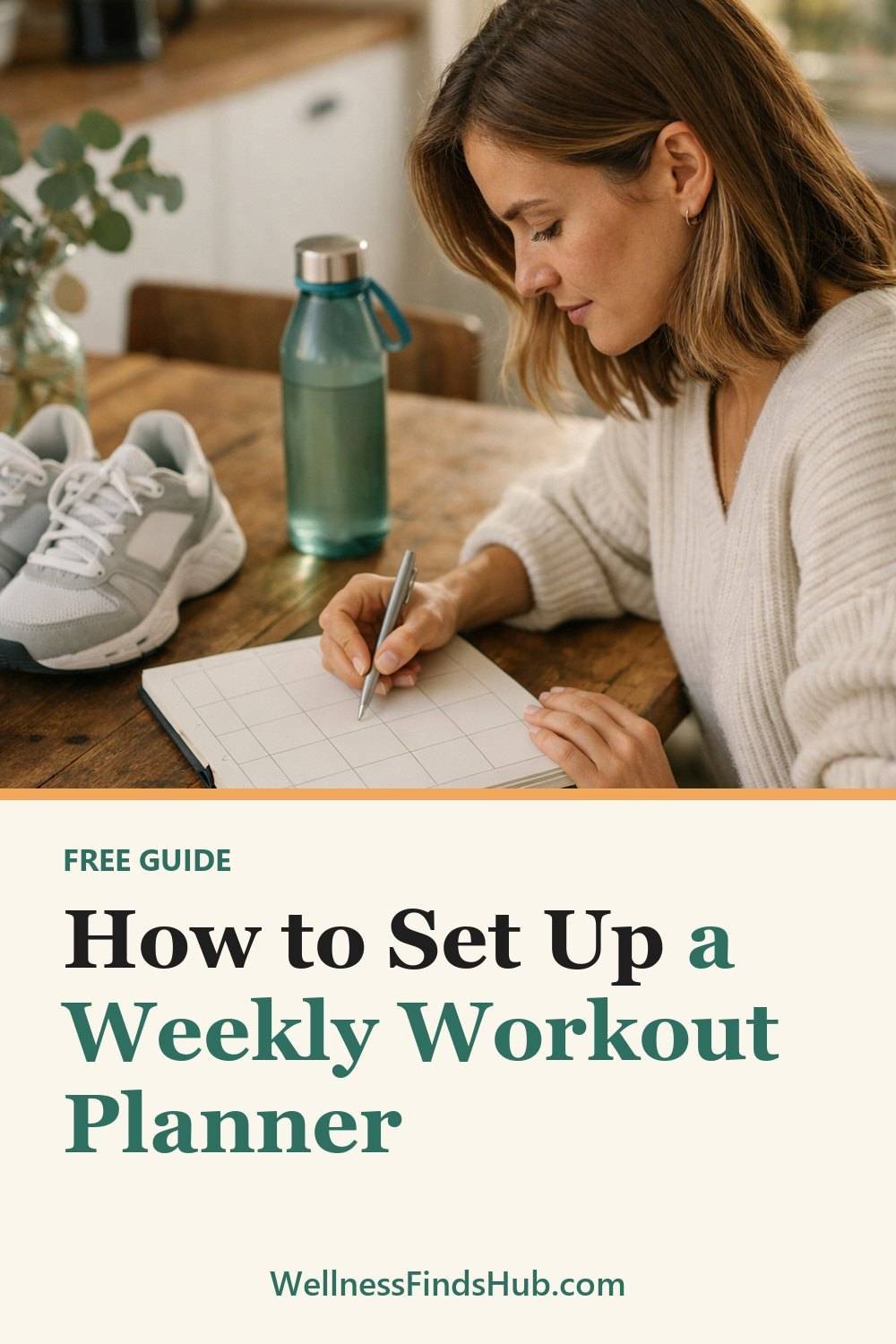
What you need for your weekly workout planner
- A planner page, a notebook, or a printed weekly grid
- A pen or pencil (pencil is nice, since plans change)
- Your calendar or work schedule for the coming week
- About 15 minutes of quiet time
- Optional: a highlighter or stickers for ticking things off
You don't need to buy anything to start, not even the best workout equipment. A sheet of paper with seven boxes works fine. You can use the back of an envelope for your first month; it costs nothing and shows whether planning on paper works for you.
Step 1: List your available days
Open your calendar and look at the week ahead. Write down which days you actually have some free time, even if it's only 15 or 20 minutes.
Be honest here. If Tuesdays are packed with work and school pickup, don't pretend you'll squeeze in an hour at the gym. You won't, and then you'll feel bad about it. A common mistake is planning six workouts a week and hitting maybe two, so start with a number you can realistically keep. Planning three sessions makes hitting three realistic.
Mark each day as one of these:
- Open: you have a decent window of time
- Tight: you have a short window, maybe 10 to 20 minutes
- Off: no realistic time at all
Tip: Look at your energy too, not just your time. If you know Thursdays leave you wiped out, treat Thursday as tight even if the calendar looks empty.
Step 2: Choose a type of movement for each day, such as a workout bike session
Now give each day a simple label. Keep the categories broad so you're not overthinking it. Mine are:
- Walking
- Strength (bodyweight, a resistance band set, or a home weight set such as Bowflex adjustable dumbbells)
- Stretching or gentle mobility
- Rest
Match the type to the day. Open days can hold the longer or harder sessions. Tight days are good for a walk or a short stretch. Off days are rest days, and that's fine. Rest counts as part of the plan, not a failure of it.
Try not to stack hard days back to back if you can help it. Something like strength, walk, strength, rest tends to feel better than three strength days in a row. That's just what's worked for me, though. If you have a health condition or you're new to exercise, it's worth checking with a doctor or a qualified trainer about what's right for you.
Tip: Write the type in a word or two, not a whole routine. "Strength, 20 min" is enough. You can figure out the exact moves on the day.
Step 3: Write down a specific time
This is the step people skip, and honestly it's the one that made the biggest difference for me.
"Walk on Wednesday" is easy to push off. "Walk on Wednesday at 7:15 a.m." is a lot harder to ignore. A set time turns the workout into an appointment instead of a vague idea floating around your day.
Pick a time that fits what you already do. Right after you drop the kids off. On your lunch break. Before you open your laptop. Tying it to something that already happens every day makes it stick better than picking a random hour.
Tip: If mornings never work for you, stop trying to be a morning person. It's easy to waste weeks setting 6 a.m. alarms I snoozed through. Evenings were my time, and once I accepted that, things got easier.
Step 4: Add a backup option
Every planned session gets a shorter backup. This is for the days that go sideways: a late meeting, a sick kid, a bad night's sleep, rain.
The backup should be small enough that you can do it almost no matter what. Some ideas:
- A 10-minute walk around the block
- Five minutes of stretching on the living room floor
- A few rounds of squats and wall push-ups
- A slow walk while you're on a phone call
Write the backup right next to the main plan, maybe in smaller letters or in brackets. So Wednesday might say: "Strength, 25 min, 6 p.m. (backup: 10 min stretch)."
Some people think the backup is cheating. It isn't. Doing ten minutes keeps the habit alive. Skipping entirely makes it way easier to skip again the next day.
Tip: For low-energy days, it helps to have ideas ready so you're not inventing something when you're already tired. That's what the Low-Energy Workout Cards and Tracker below this post are for, if you'd like a ready-made set. A handwritten list on a sticky note works too.
Step 5: Put the plan somewhere you'll see it
A plan hidden in a drawer doesn't do much. Put yours where your eyes land every day. The fridge door. Next to your bathroom mirror. Taped inside the front of your work notebook.
Keep yours where you'll see it first thing every morning, such as on the fridge. Seeing "walk, 7:15" while the kettle boils is a good little nudge.
If you prefer digital, you can put each session into a phone calendar like Google Calendar with a reminder. Just know that phone reminders are easy to swipe away. Paper on the fridge is weirdly harder to ignore.
Tip: While you're planning your week, it's a good moment to think about food too. If you'd like a head start, our free 3 Meal Prep Idea Cards (breakfast, lunch and dinner) are yours when you join the email list.
Step 6: Tick off each session as you do it
Every time you finish a workout, or a backup, mark it. A tick, a cross, a smiley face, a colored-in box. Whatever you like to use.
It sounds a bit childish, but seeing a row of ticks by Friday feels good. It also gives you real information. You'll start noticing patterns, like "I always miss Monday" or "Saturday walks are easy for me."
Mark backups differently from full sessions if you want. Try a full tick for the main plan and a half tick for the backup. Both count. The half ticks just help me see when a week was rough.
Tip: Don't erase or hide missed days. Leave them blank. Blank boxes aren't a judgment, they're clues for next week's plan.
Step 7: Rewrite the plan every week
At the end of the week, sit down for a few minutes and look at what actually happened. Then plan the next week based on that, not on what you wish had happened.
Ask yourself a few quick questions:
- Which sessions did I do, and which did I skip?
- Were the skipped ones at a bad time, or just too long?
- Did anything feel too easy or too hard?
- What's different about next week's schedule?
Then make small changes. Move the Monday session to Tuesday. Shorten the Thursday one. Swap a strength day for a walk if your body's tired. Little tweaks add up over a month or two.
If you like having a structure for this weekly check-in, the Busy Adults Fitness Planner and Checklist Bundle below this post has pages laid out for it. But a plain notebook does the job if you'd rather keep it simple.
Tip: Do your weekly rewrite at the same time each week. Sunday evening with a cup of tea is my slot. It takes about ten minutes once you're used to it.
Troubleshooting
"I keep skipping the same day."
That day probably isn't working. Don't fight it. Turn it into a rest day or a backup-only day and move the workout somewhere else. If Mondays keep failing, it can help to give up on Mondays instead of fighting them. Problem solved.
"I planned too much and feel behind by Wednesday."
This happens a lot, especially at the start when you're excited. Cut the plan in half next week. It's much better to finish a small plan than to abandon a big one. You can always add more later.
"My schedule changes every week."
Then the weekly rewrite matters even more. Plan only the days you're sure about, and leave the rest as "if I get a window, do the backup." Shift workers and parents of young kids often do better with flexible plans than rigid ones.
"I get bored."
Change the type of movement, not the plan itself. Try a new walking route, a different stretching video, or a strength routine you haven't done before. Keep the day and time the same, just swap what's in the box.
"I missed a whole week."
Just start again on the next one. Seriously, that's all. Don't try to "make up" missed sessions by doubling up, because that usually leads to feeling sore and quitting again. Fresh page, fresh week.
Tools that can help with your weekly workout planner
You can start with a sheet of paper, but a few tools make planning and tracking easier if you want them. Here are some well-known options that fit the steps above.
Google Calendar
Suits people who want each session to show up as a timed appointment with a reminder. Check your notification settings, since reminders are easy to swipe away without acting on them.
Strides
A habit tracker app for people who like ticking off sessions on a phone. Check which tracking options are included in the free version before you rely on it.
Notion
Suits people who enjoy building their own weekly template and reviewing it each Sunday. It can feel like a lot at first, so check whether a simple setup is enough for you.
Apple Fitness
Suits iPhone and Apple Watch owners who want guided workouts and activity tracking in one place. Check that your devices are compatible and what the subscription covers.
Nike Training Club
A workout app with guided sessions that can fill in the "what do I do today" gap. Check which workouts and features are free and which need a paid plan.
Fitbit
Suits people who like a wrist tracker for steps and walks. Check which models work with your phone and whether you want any premium features.
Bowflex
Known for adjustable dumbbells, which suit people building a home strength routine in a small space. Check weight ranges, storage footprint and how much you truly need before buying.
Check current plans and prices on each brand's own site before you decide.
FAQ
How many workouts should I plan each week?
Start with what you can realistically do, even if that's two or three short sessions. You can build up once the habit feels steady. If you're unsure what's right for your health, ask a doctor or a qualified fitness professional.
Do I need special equipment or a special planner for this?
No. Any paper with seven boxes works, and so does a phone calendar, and you can start with a cheap dumbbell set or just your bodyweight. A dedicated planner can be nice if you like structure, but it's not required to get started.
What counts as a workout on my plan?
Anything you've decided to count. Walks, stretching, strength moves, a ride on a workout bike, dancing in the kitchen. The point is moving on purpose, not hitting some official standard.
Should rest days go on the plan too?
Yes, write them in. Seeing "rest" on purpose feels very different from a blank day you skipped. It reminds you that resting is part of the plan.
Your next step
Grab a piece of paper this week and sketch out your seven days. Keep it small, add a time, and write in one backup. That's enough to start. If you'd like a little help on the food side while you're at it, sign up for the email list to get the free 3 Meal Prep Idea Cards. Then, if you want something ready-made for your workouts, have a look at the Busy Adults Fitness Planner and Checklist Bundle and the Low-Energy Workout Cards and Tracker below this post.
Printables and tools that can help
Busy Adults Fitness Planner and Checklist Bundle
A printable bundle with a 30-day goal page, weekly planner and setup checklists for starting a routine at...
See detailsLow-Energy Workout Cards and Tracker
Printable workout idea cards and a tracker for days when energy is low. General ideas only, not medical...
See details