How to Use a Habit Tracker
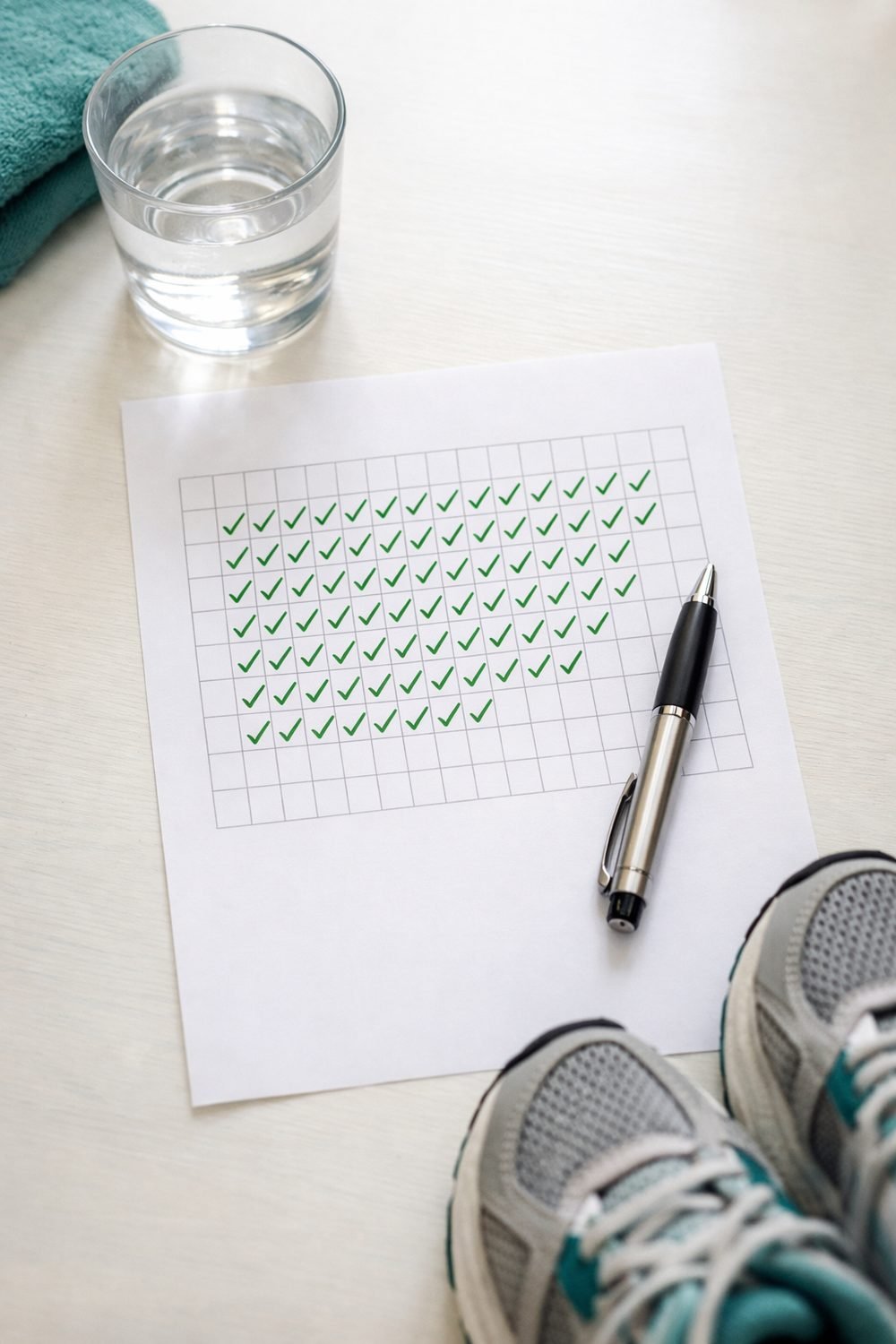
A habit tracker, much like a step tracker or activity tracker, makes your habits visible. That's really all it does, and it's enough. The trick is keeping it simple enough that you actually fill it in every day, even on the days you're tired and kind of grumpy about it.
There are plenty of tracker options to choose from, including daily habit trackers, apps, and printable sheets. Fancy apps, color-coded spreadsheets, a notebook I decorated for two hours and then never opened again. The ones that stuck were always the plain ones. So this guide is about the plain approach. It works, and it doesn't ask much of you.
Short on time? Our top picks: Streaks, Habitica, Loop Habit Tracker and Todoist. See all picks
What you need
- A tracker. This can be a printable habit tracker, a page in a notebook such as a Moleskine, or a simple grid you draw yourself.
- A pen you like using. Sounds silly, but a scratchy pen is one more reason to skip it.
- A spot where you'll see the tracker every day.
- One to three habits you actually want to build. Not ones you think you should want.
- About ten minutes to set it up, plus a few seconds each day after that.
You don't need an app, though something like Streaks is there if you want one. You don't need stickers. If you like stickers, great, but they're optional.
Step 1: Choose three habits at most
This is where most people go wrong, and I was one of them. A first tracker with eleven habits on it is usually too much. Drink water, stretch, read, journal, floss, walk, no phone after nine, and a few more I've thankfully forgotten. By day four I was ticking maybe two boxes and feeling like I'd failed at all the rest.
Fewer habits are easier to keep. Pick one, two, or three. If you're not sure, start with one. You can always add more later, once the first one feels normal.
How do you pick? Ask yourself which habit would make the biggest difference to how your day feels. For me it was getting outside for a walk. That one habit made sleeping, eating, and my mood a little easier. Your pick might be totally different, and that's fine.
Tip: If you have a long list of habits in your head, write them all down first. Then cross off everything except the top one to three. Keep the rest on a "later" list so you don't feel like you're giving them up forever.
Step 2: Define each habit clearly
"Exercise more" isn't a habit you can tick off. What counts? Five minutes? An hour? A walk to the mailbox?
Write down exactly what counts as done. Something like:
- A ten-minute walk, any pace
- Drink one full glass of water before coffee
- Read five pages of a book (not a phone)
- Lights off by 11pm
The clearer it is, the less arguing you'll do with yourself at the end of the day. And trust me, you will try to argue. "Does walking around the grocery store count?" If you wrote "ten-minute walk outside," you already know the answer.
It also helps to set the bar low on purpose. A ten-minute walk is easy to say yes to. If I end up walking for forty minutes, that's a bonus. But the box only asks for ten.
Tip: Write the definition right on the tracker, next to the habit name. Future you will forget what present you meant.
Step 3: Set up your daily habit tracker
Keep the layout simple. Habits go down the left side, days of the month go across the top. Each square gets a tick, an X, or a dot when you've done it. That's the whole system.
If you'd rather not draw grids, a habit tracker printable saves time, and a wellness habit tracker template is a nice place to start. We have a couple below this post, the Hydration and Healthy Habits Tracker and the Habit and Sleep Tracker, which works as a simple sleep habit tracker if rest is your focus. But honestly, a ruler and a blank page work too. Use whatever you'll actually stick with.
One thing I'd skip: trackers with tons of extra sections. Mood ratings, gratitude lines, weekly reflections, goal boxes. They look nice, but every extra blank space is something you might feel bad about not filling in. Start bare. Add things only if you miss them.
Tip: Start your tracker on whatever day it is today. You don't need to wait for a Monday or the first of the month. Waiting for the "perfect" start date is just a polite way of putting it off.
Step 4: Put the tracker where you'll see it
Out of sight really is out of mind. If your tracker lives in a drawer, it'll stay in the drawer.
Good spots are places you pass every day without thinking about it. The fridge door. Next to your desk. On the bathroom mirror. Beside your bed if your habits are evening ones. Try taping yours inside a kitchen cabinet, like the one with the mugs, since you open it every single morning.
Think about when you'll be doing the habit, too. If your habit is drinking water in the morning, the kitchen makes sense. If it's reading before bed, keep the tracker on your nightstand with the book.
Tip: Keep the pen with the tracker. Tie it on with string or stick it on with a magnet clip. Hunting for a pen is a small hassle, but small hassles add up fast.
Quick side note: if one of your goals is eating a bit better, our free 3 Meal Prep Idea Cards for breakfast, lunch, and dinner are yours when you join the email list, and they pair nicely with a food or water habit.
Step 5: Mark it right away
Tick the box as soon as you finish the habit. Not at the end of the day. Not "later." Right then.
There are two reasons this matters. First, you won't forget. A common mistake is telling yourself you'll fill it all in at night, then standing there trying to remember if you actually drank that glass of water or just thought about it. Second, ticking the box feels good. It's a tiny reward, and it ties that good feeling to the habit itself.
If you do your habit away from home, like a walk at lunch, just mark it as soon as you get back. Close enough.
Tip: Make the mark you use satisfying. Some people like a big X. Coloring the whole square in can feel satisfying. It's a little childish and I don't care.
Step 6: Don't chase streaks
You'll miss a day. Probably more than one. That's normal, and it doesn't mean the tracker isn't working.
Streaks can be motivating for a while. Seeing twelve ticks in a row feels great. But the problem shows up the day you break it. A lot of people, me included, see that empty square and think, "Well, it's ruined now," and quit for a week. That's the streak working against you.
A rule I've found helpful: try not to miss two days in a row. One missed day is just life. You got sick, the kid was up all night, it poured rain. Two in a row is when the habit starts to slip. So if you miss a day, make the next one a priority. That's all.
And look at the whole month, not just the gaps. If you walked twenty out of thirty days, that's twenty more walks than you'd have taken without trying. That counts for a lot.
Tip: Leave missed days blank. Don't write angry notes or big red Xs on them. Just move to the next square.
Step 7: Review once a month
At the end of each month, sit down with your tracker for five minutes. Coffee helps. Look at what happened.
Some questions I ask myself:
- Which habit did I do most often? Does it feel easy now?
- Which one kept getting skipped? Why?
- Was the definition too hard? Too vague?
- Did I put the tracker in the wrong spot?
- Do I still care about this habit?
That last one is worth asking honestly. Sometimes a habit just isn't right for you, and that's okay. If you keep skipping a habit, it may be because you don't enjoy it. You can swap it for something you actually look forward to, like reading at night.
Keep what works. Change what doesn't. If a habit feels automatic, you might take it off the tracker and add a new one from your "later" list.
Tip: Keep your old tracker sheets. Flipping back through a few months of them is oddly encouraging, especially on a rough week.
Troubleshooting
"I keep forgetting to fill it in."
Move it. Wherever it is now isn't working. Put it right next to something you do every day, like your coffee maker or toothbrush. You can also link the tick to another habit: brush teeth, then mark the tracker.
"I start strong and then stop after a week or two."
This usually means the habit is too big or you have too many. Cut back to one habit and make it smaller. Ten minutes instead of thirty. One glass instead of eight. Get it going first, then grow it.
"Looking at the empty boxes makes me feel bad."
This concern is common and understandable. Try switching to a weekly tracker instead of a monthly one, so there are fewer squares staring at you. Or change your goal to something like "most days" rather than "every day." The tracker is there to help you notice things, not to judge you.
"I'm doing the habit but I don't see any difference."
Some habits take a while before you feel anything. Give it a full month or two before deciding. And if you're tracking something health-related, like sleep quality or hydration, and you have real concerns, it's a good idea to talk to a doctor rather than relying on a tracker alone.
"My schedule is all over the place."
Pick habits that are flexible about timing. "Walk ten minutes any time today" works better than "walk at 7am." Shift workers and parents of small kids especially, go easy on yourself here.
Habit tracker tools worth a look
If you want a little help beyond a hand-drawn grid, these are well-known options for tracking habits on paper or on your phone. Pick the one that fits how you already live.
Streaks
A phone habit app that suits people who want a clean, simple list on an iPhone. Check that it is available for your device before you commit, since it is not made for every platform.
Habitica
This app turns habits into a game, which can suit people who like playful rewards. Check whether the game style feels motivating or just distracting for you.
Loop Habit Tracker
A free, open source Android app for people who want a no-fuss tracker without ads. Check that you are happy with a plain look and that it works on your phone.
Todoist
A general task app that can handle recurring tasks, so it works if you want habits and to-dos in one place. Check whether its recurring task setup feels like a habit tracker to you or more like a chore list.
Notion
A flexible workspace for people who like building their own tracker pages and templates. Check that you will not spend more time designing it than using it.
Bullet Journal
A paper notebook method with a simple habit grid, good for people who prefer pen and paper. Check that you will keep it somewhere visible, and pick a notebook you enjoy writing in.
Moleskine
A well-known notebook brand that suits anyone who wants a sturdy place to draw a habit grid by hand. Check the page style, such as dotted or grid, so it suits the layout you want.
Check current plans and prices on each brand's own site before you choose.
FAQ
Is a paper tracker better than an app or a smart tracker?
Neither is better for everyone. Paper has an edge because you see it without unlocking your phone, and you don't get pulled into other apps. A free printable also costs nothing, which beats paying for a subscription. Try one for a month and switch if it's not working.
How long does it take to build a habit?
It really depends on the person and the habit, so I'd be wary of anyone who gives you an exact number. Simple habits might feel normal in a few weeks, harder ones can take months. Keep tracking until it feels like something you'd do even without the box.
Can I track habits I want to stop, not just start?
Yes, you can. Just frame it clearly, like "no phone in bed" or "no snacks after 9pm," and tick the box on days you stuck to it. Some people find it easier to track a replacement habit instead, like "read before bed."
What if I miss a whole week?
Just start again on the next empty square. Don't redo the month or throw the sheet away. The gap is part of the record, and starting again is the habit that matters most.
Your next step with a simple wellness starter tracker
Pick one habit today, write down exactly what counts, and put your tracker somewhere you can't miss it. That's enough to get going. If you'd like a little help on the food side, grab the free 3 Meal Prep Idea Cards by joining the email list. Then take a look at the Hydration and Healthy Habits Tracker and the Habit and Sleep Tracker below this post, in case one of them saves you the trouble of drawing your own grid.
Printables and tools that can help
Hydration and Healthy Habits Tracker
A printable tracker for daily habits you choose, such as water, steps or bedtime. General habit tracking, not...
See detailsHabit and Sleep Tracker
A browser tool where you log habits and sleep times you enter yourself and see your own entries. Your data...
See details