Yoga Mat Buyer's Guide: Floor, Grip and Thickness
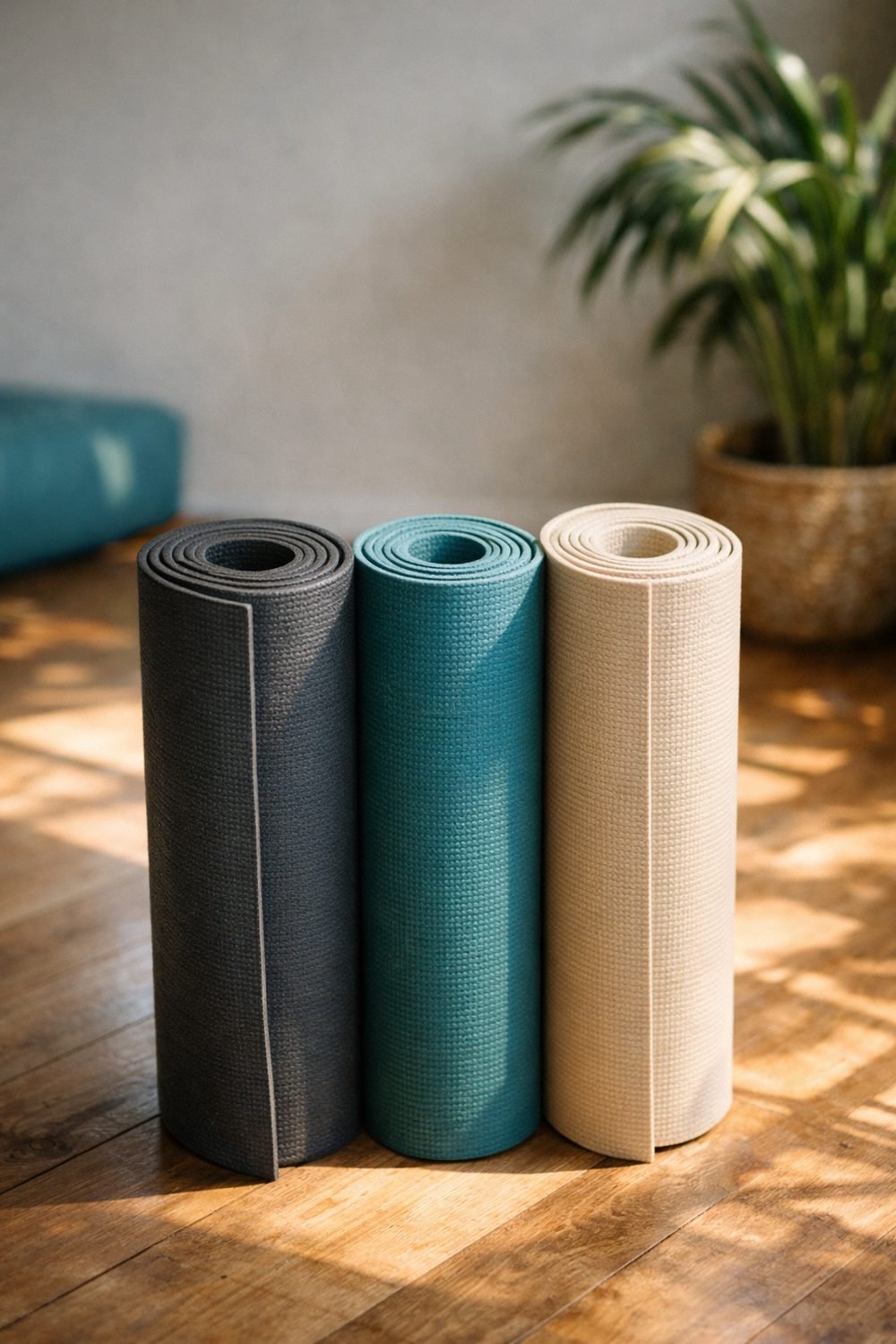
The best grip yoga mat is the one that suits your floor and your style of practice. That sounds obvious, but it took me two wrong mats to really get it. A first mat that is thick and squishy can feel lovely for about a week. If you try a standing balance pose on carpet, you may wobble like a newborn deer. A thin, grippy mat can be great on a wood floor, but it may hurt your knees in every kneeling pose.
So this guide covers what is worth knowing before you spend money twice. We'll look at your floor first, then thickness, grip, materials, size and a few small things people forget. If you're about to buy a yoga mat, this is the checklist to use. No brand pushing, no magic mat. Just what to check so you pick something you'll actually use.
Short on time? Our top picks: Manduka, Liforme, Jade Yoga and Gaiam. See all picks
Quick summary
- Check your floor first. Hard floors and carpet need different mats.
- Thinner is usually steadier. Thicker is usually kinder to knees. You're picking a balance between the two.
- Grip matters more than looks. Think about whether your hands get sweaty.
- Material changes everything: smell, weight, grip, how it wears and how you clean it.
- Measure yourself and your space. Tall people often need a longer mat.
- Match the mat to your practice. Slow, gentle yoga and fast, sweaty flows ask different things.
- Read the seller's page for care and allergy info, especially with natural rubber.
Start With the Floor You'll Actually Use
Most buying guides start with thickness. That is backwards. The floor under your mat changes how every mat feels, so it's the first thing to think about.
Hard floors: wood, tile, laminate, concrete
Hard floors give you a stable base. That's good for balance. The downside is there's no give at all, so a very thin mat can feel harsh on your knees, wrists and hip bones when you lie down.
On a hard floor, a mid-thickness mat is often the sweet spot. You also want the underside of the mat to grip the floor. Some mats slide around on smooth tile, and there's nothing more annoying than your whole mat creeping forward during a downward dog.
Carpet and rugs
Carpet already adds cushion. If you put a thick, soft mat on top of a soft carpet, you get a squishy stack that makes balance poses hard. That was my deer moment.
On carpet, a thinner, firmer mat usually works better. It sits on top of the pile without sinking much. Fluffy shag rugs are tricky with any mat, honestly. If you can, roll the mat out on a flatter spot.
Outdoors and travel
Grass, decking and hotel floors are a mixed bag. Grass is uneven, so a little extra thickness can help. For the best travel yoga mat, people often go with a very thin, foldable one and accept that it's less cushioned. You can skip hauling a heavy home mat in a suitcase. It is easy to resent the extra weight the whole trip.
Thickness: Cushion Versus Stability
This is where most people overthink it. Here's the simple version. More thickness means more cushion. Less thickness means you feel the floor better, which helps with balance.
Thin mats
Thin mats feel firm and close to the ground. They're easy to roll, easy to carry and good for standing poses. If you do a lot of balancing or flowing between poses, a thin mat keeps you steady.
The trade-off is comfort. If you have sensitive knees, a thin mat on a hard floor might bug you after ten minutes.
Standard or mid-thickness mats
This is the best yoga mat thickness for beginners, in my view. It's enough cushion for kneeling and lying down, but not so much that you sink. If you don't know what you like yet, the middle is a safe place to start.
Thick mats
The best thick yoga mat is comfy. They're nice for gentle stretching, restorative poses and floor work. But they can feel unstable in standing poses, and they're often heavier to carry.
A small opinion here: I think very thick, foamy mats are a bit overrated for regular yoga. They feel amazing in the shop and less amazing in tree pose. If you mainly want knee comfort, a folded towel or a small knee pad under a regular mat often does the job.
Thickness at a glance
- Thin: best for balance, travel and carpet. Least cushion.
- Mid: good all-rounder for most homes and most styles.
- Thick: best for gentle or floor-based practice on hard floors. Can wobble in standing poses.
Sellers list thickness in millimetres or inches, so check the product page and compare the same unit. Don't guess from the photo. Every mat looks thick when it's shot from a low angle.
Finding the Best Grip Yoga Mat: The Thing You Notice Most
You won't care much about grip until your hands start sliding in a downward dog. Then it's all you care about.
Top grip (where your hands and feet go)
Some surfaces feel tacky and sticky right away. Others feel smooth when dry but grip better as you warm up. And some get slippery the moment you sweat.
Think honestly about yourself. Do your palms get damp? Do you practice in a warm room? If yes, grip should be near the top of your list. If you mostly do slow stretching in a cool room, you have more freedom.
Bottom grip (where the mat meets the floor)
People forget this side. A mat with a great top surface can still slide on a polished floor. Look for a seller description that mentions the underside or floor grip. Reviews are useful here too, especially ones that mention the type of floor the person has.
Breaking in a mat
Some new mats feel slick at first because of a coating from the factory. Many people say this improves after a few sessions or a gentle wipe. If a mat feels slippery on day one, check the seller's care advice before you give up on it. If it's still sliding after a couple of weeks, that's probably just how it is.
Quick grip fixes
- Wipe your hands before you start, especially if you've used lotion.
- Keep a small towel nearby for sweaty hands.
- Clean the mat regularly, since a dusty or oily surface loses grip.
- Try a yoga towel with grip laid on top if you sweat a lot. Some people swear by these, and Yogitoes is a well-known name to look at.
Materials: What the Mat Is Made Of
Material affects grip, weight, smell, how long it lasts and how you clean it. Here's a plain look at the common types. This is kept general, because every brand mixes things a bit differently, so always read the seller's own description.
PVC
Often found in cheaper mats. They tend to be durable and easy to wipe clean. Grip can be fine when dry but sometimes slippery when wet. Some people prefer to avoid PVC for personal or environmental reasons, so check what matters to you.
TPE
Usually lighter and a bit springy. A lot of beginner mats use it. It's often easy to carry. Some TPE mats wear down faster than heavier materials, but that depends a lot on the specific mat.
Natural rubber
Rubber mats are usually known for good grip and a heavier, steady feel. They can be heavy to carry, and many have a rubbery smell at first that fades over time. Important: if you have a latex allergy, read the seller's page carefully and ask a doctor if you're unsure. Don't guess on this one.
Cork
A good cork yoga mat feels different. Smooth and a little warm. Some people say cork grips better as you sweat, which makes it popular with folks who get damp hands. It can feel firm and less cushioned, depending on what's underneath.
Cotton or jute
These have a more textured, natural feel. They can be rougher on the skin and don't always cushion much. They're a nice option for some styles, but I wouldn't pick one as a first mat unless you've tried it.
Comparing materials side by side
If grip is your top priority, people often look at rubber or cork. If you want something light for carrying to a class, TPE is a common pick. If you're on a tight budget and want something easy to wipe down, PVC is widely available, and a brand like Gaiam is one place to look. None of these is "best." They just suit different people.
Quick side note while we're on choosing things that fit your routine: if you like a bit of structure in your week, our free 3 Meal Prep Idea Cards for breakfast, lunch and dinner are yours when you join the email list.
Size, Weight and Storage
This part is boring until it isn't. A mat that's too short or too heavy will quietly stop getting used.
Length and width
Lie down on the floor and stretch your arms over your head. If your hands and feet would hang off a standard mat, you probably want a longer one. Tall people often find this out the hard way, with their head on the floor in every resting pose.
Width matters too. If you have broad shoulders or like room to move, a wider mat feels less cramped. Check the measurements on the seller's page and compare them with your own height.
Weight
If the mat stays at home, weight barely matters. If you're carrying it to a class, on a bus or up stairs, it matters a lot. A heavy rubber mat on your shoulder for a long walk gets old fast.
Storage
Where will it live? Under a bed, behind a door, in a cupboard? Most mats roll, some fold. Folding mats are great for small spaces but can leave creases. Rolled mats sometimes curl at the ends for a while. Rolling it the other way for a bit usually helps.
Match the Mat to Your Style of Practice
Not all yoga is the same, so not all mats suit everyone. Here's how I think about it by practice type.
Slow, gentle or restorative yoga
You spend a lot of time sitting and lying down. Comfort matters more than grip. A slightly thicker mat on a hard floor makes sense here.
Flowing, faster or sweaty sessions (hot yoga)
You're moving a lot, often sweating. Grip and stability come first. A mid or thinner mat with a grippy surface tends to work better.
Mixed home workouts
Lots of people use their mat for stretching, light exercise and core work too. In that case, a durable mid-thickness mat is a sensible all-rounder. Just know that shoes on a yoga mat can wear the surface down quickly, so I'd keep the mat for barefoot stuff if you can.
If you have joint pain or an injury
Please ask a doctor or physiotherapist what's right for you. A mat can make you more comfortable, but it's not a fix for pain, and I'm not the person to tell you what your body needs.
Cleaning, Smell and How Long It Lasts
Nobody buys a mat thinking about cleaning it. Then three months later it smells like feet.
Everyday cleaning
A gentle wipe after sweaty sessions goes a long way. Let it air dry before rolling it up, otherwise it stays damp inside. Different materials need different care, though. Some don't like harsh cleaners or sitting in direct sun. Always follow what the seller recommends.
New mat smell
Some mats, especially rubber ones, smell strong when new. Leaving it unrolled in an airy room for a few days often helps. If smells bother you a lot, check reviews before buying, since people mention it often.
When to replace it
Signs your mat is done: flaking bits, thin patches where your hands go, losing grip even after cleaning, or tears. There's no set timeline. It depends on how often you practice and what it's made of.
Yoga Mat Price: Where Spending More Helps and Where It Doesn't
Prices are not listed here, because they change all the time and vary by shop. But I can share how I think about it.
If you're brand new and not sure you'll stick with yoga, a simple, decent mat is fine. You'll learn what you like and don't like. That knowledge is worth more than starting with a fancy mat.
If you practice several times a week, spending a bit more on grip and durability often feels worth it, because you notice those things every single session. What I'd skip: paying extra just for a pretty print or a famous name. The pattern doesn't help you balance.
There are no specific mat picks below this post right now, so use the checks in this guide when you're comparing seller pages.
Common Mistakes
These are common mistakes, so no judgement.
- Buying the thickest mat for "comfort." Then wobbling in every standing pose. Cushion is nice, but too much hurts balance.
- Ignoring your floor. A mat that's perfect on wood can feel totally different on carpet.
- Choosing by looks. Colour and patterns are fun. They tell you nothing about grip.
- Forgetting your height. If your feet hang off the end, you'll feel it every session.
- Skipping the care instructions. Using the wrong cleaner can wreck some surfaces fast.
- Not checking for latex. If you have an allergy, read the material details carefully.
- Giving up on a new mat too fast. Some need a few sessions to break in. Others really are just slippery. Give it a fair go first.
- Rolling it up wet. This is how the smell starts.
A Simple Way to Decide
If all of this feels like a lot, try this. Answer four questions, in order:
- What floor will I use it on most?
- Do I need more balance or more cushion?
- Do my hands sweat?
- Will I carry it anywhere?
For example, say you practice slow stretches on a tile floor and never leave the house. A mid to thicker mat with good floor grip would suit you, and weight doesn't matter. Now picture someone doing sweaty flows on carpet before heading to a class twice a week. They'd lean toward a thinner, lighter, grippy mat. Same hobby, totally different mat.
Yoga mats worth a look
These are well-known mat brands that cover the main styles covered above. Use the checks in this guide (floor, thickness, grip, material) when you compare their product pages.
Manduka
Suits people who practice often and want a durable, dense mat. Check the weight before buying if you plan to carry it to class.
Liforme
Suits people who care about grip and alignment guides and have room in the budget. Check the size and material details on the seller's page.
Jade Yoga
Suits people who like natural rubber and a steady, grippy feel. If you have a latex allergy, read the material information carefully first.
Gaiam
Suits beginners who want a simple, widely available mat to learn what they like. Check the thickness and material, as ranges differ.
Lululemon
Suits people who want a mat to match their workout gear and who often sweat during practice. Check the care instructions for the specific mat.
Yoloha
Suits people looking for a cork-based mat as a natural option. Check how firm the cushioning is and whether it fits your floor.
Yogitoes
Suits sweaty practice, as it is a grippy towel that lays over a mat. Check that it sits well on your existing mat before relying on it.
Check current plans and prices on each brand's own site before you decide.
FAQ
What thickness is best for beginners?
A mid-thickness mat is a safe first choice for most people. It gives enough cushion for kneeling but stays steady for standing poses. Once you know your preferences, you can go thinner or thicker.
Can I use a yoga mat on carpet?
Yes, lots of people do. A thinner, firmer mat usually works better on carpet because the carpet already adds cushion. Very fluffy rugs can make any mat feel unstable.
Why is my new mat slippery?
Some new mats have a surface coating that wears off after a few sessions or a gentle clean. Check the seller's care advice first. If it stays slippery after a fair try, it may just not suit your grip needs.
How often should I clean my mat?
A quick wipe after sweaty sessions helps a lot, plus a deeper clean every so often. Let it dry fully before rolling it up. Follow the seller's instructions, since some materials need gentler care than others.
Here's your next step. Grab your free 3 Meal Prep Idea Cards by joining the email list in the box on this page. They're a nice little way to make your week feel a bit more organised. Then, with your floor, height and practice style in mind, take the four questions above to whatever mats you're comparing. You'll spot the right one much faster than I did.
1. Consider the floor you use
Hard floors and carpet call for different thickness.
2. Compare thickness and cushioning
Thicker is softer, thinner is more stable.
3. Look at the surface texture
Read the grip description on the seller's page.
4. Check length and weight
Tall users and commuters have different needs.
5. Look at materials and care
Cleaning steps vary by material.
6. Read the seller's page
Confirm size, material and return terms before buying.
Ready to look?
This is an affiliate link. Prices and terms change, so check the seller's page. General information only, not medical advice.
Want a printable to keep track while you work? Get our free 3 meal prep idea cards - breakfast, lunch, dinner.